I had walked past Jerusalem's emblem dozens of times before I noticed the olive branches beside the lion. I stopped and photographed it.
There is another branch in the Great Seal of the United States, held in the eagle's right talon.

Charles Thomson, who finalized the design in 1782, placed thirteen arrows in the eagle's left talon and the olive branch in its right, and noted that the two together represented the power of peace and war; in the modern Great Seal the branch carries thirteen leaves and thirteen olives, corresponding to the original states. The eagle faces the branch.
Israel's state emblem is a seven-branched menorah between two olive branches, with the word Israel below. The Shamir brothers designed it in 1948, and Gavriel Shamir later explained that they chose olive branches as "the most beautiful expression" of the Jewish people's love of peace. The committee then asked the brothers to replace their modern menorah with the menorah from the Arch of Titus, so Rome's image of Jewish defeat became the emblem of Jewish return; the final emblem echoes Zechariah 4, a menorah flanked by two olive trees, oil feeding the light. It was adopted officially on February 10, 1949.
Both countries placed the olive branch near the center of the national emblem. Israel chose the branch and left out the dove that carried the leaf back to Noah.
Why does a branch keep appearing beside the strongest image in the emblem? I first asked that of the lion of Judah on that Jerusalem building. The question turned into a longer piece I am still writing about the menorah and its meaning, and this post is a small part of it.
Why the olive branch?
The olive branch has carried diplomatic meaning for at least 2,500 years, moving through several major civilizations on the way.
It entered symbolic language with Noah's dove: after the flood the bird returned holding an olive leaf, the first sign that life had risen back above the water.
From there the branch moved through Greece, where Olympic victors received olive wreaths and carrying a branch meant "I come without weapons"; in Rome, Peace was depicted on coins holding an olive branch. Then the Hebrew prophets: Zechariah chapter 4 describes a menorah flanked by two olive trees and delivers a sentence that would carry forward for 2,500 years: "Not by might, nor by power, but by my spirit."
That verse is the context for Israel's emblem, and the American framers drew from the same Mediterranean vocabulary. After World War II the United Nations codified the symbol for modern diplomacy: a world map wrapped in two olive branches.
I found the olive branch in at least twenty official emblems. The full atlas is at the end of this post.
What connects them
In the emblems I collected, something beside the olive branch usually catches the eye first: an eagle, a lion, or a weapon. I read the branch as a reminder to the creature beside it: you have power. What will you do with it?
Oil floats on water and can fuel a lamp. I keep thinking about those two ordinary facts when I look at the menorah.
They also bring me back to Noah's dove. The Ramban asked why the dove brought back an olive leaf, and his answer is about the water: the trees were not necessarily uprooted, because the flood was still water, not a rushing river, and the leaf could have come from a tree that survived.

Small enough to miss, the branch has sat beside eagles, lions, and maps for 2,500 years. On Israel's emblem it does one more thing: it feeds the menorah.
A working atlas of official olive branches
Twenty national, quasi-national, and international emblems where the olive branch is part of the official design. Sources are the emblems themselves and the official descriptions where one exists.
The two that anchor the story
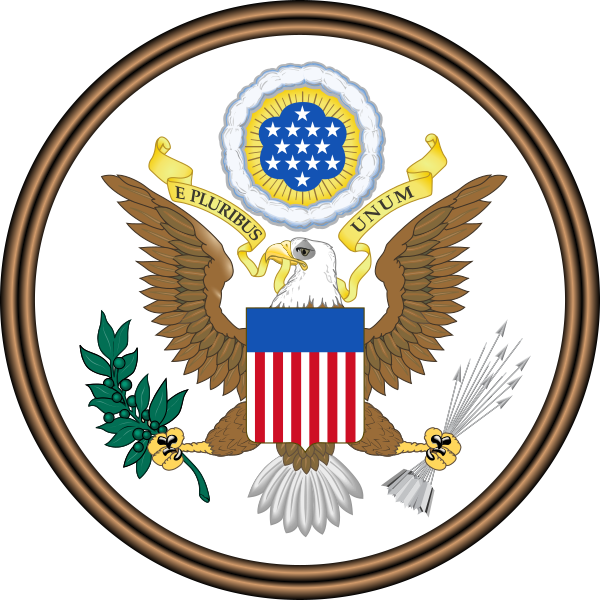 United States United States |
The Great Seal (1782). The eagle holds an olive branch in its right talon, thirteen arrows in its left. The eagle's head turns toward the olive branch side. The branch carries thirteen olives, one for each original state. |
 Israel Israel |
State emblem (1949). Menorah between two olive branches, the word Israel below. Designed by the Shamir brothers. Echoes Zechariah 4: light at the center, olive trees on both sides. |
Americas
 Paraguay Paraguay |
The national seal shows a star flanked by a palm branch on the left and an olive branch on the right. The reverse carries the Treasury emblem and the motto "Paz y Justicia." |
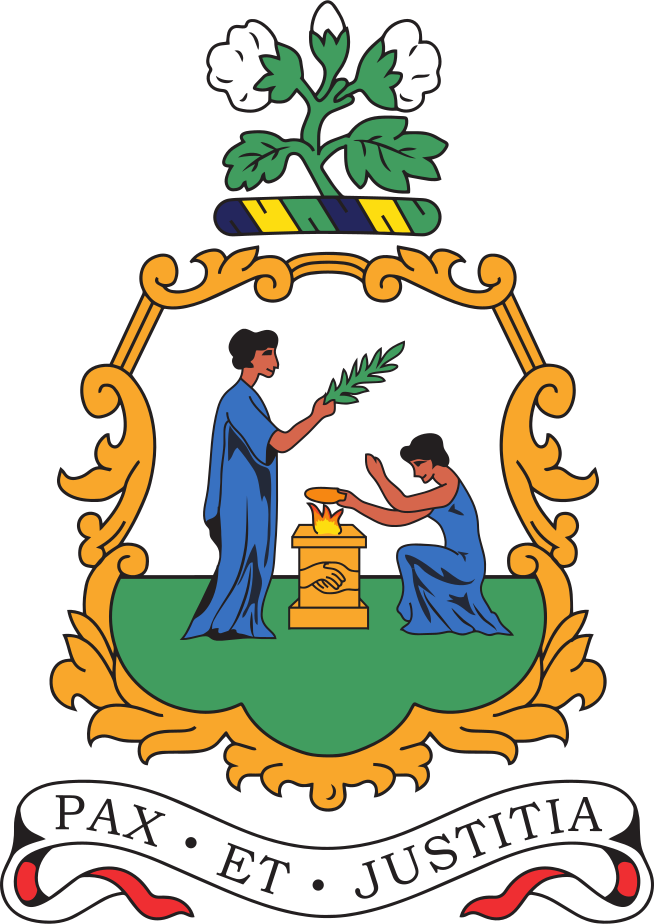 Saint Vincent and the Grenadines Saint Vincent and the Grenadines |
The shield shows three women on a green background. The figure on the right holds an olive branch. Motto: "Pax et Justitia." |
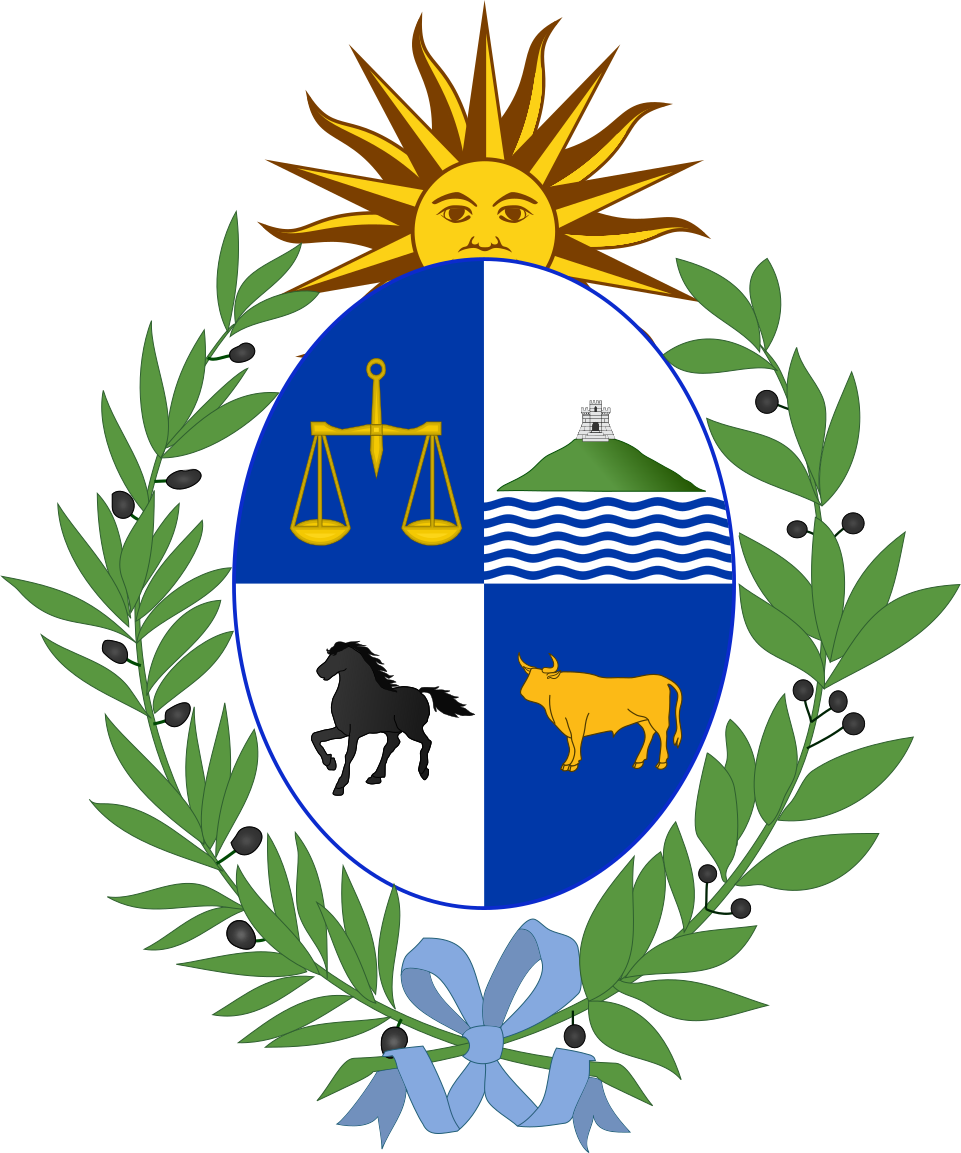 Uruguay Uruguay |
The coat of arms (1829) is encircled by a laurel branch and an olive branch. A traditional pairing: victory and peace. |
 Venezuela Venezuela |
The shield (2006 version) is flanked by a palm branch on the left and an olive branch on the right, tied with a ribbon in the national colors. |
Europe and Mediterranean
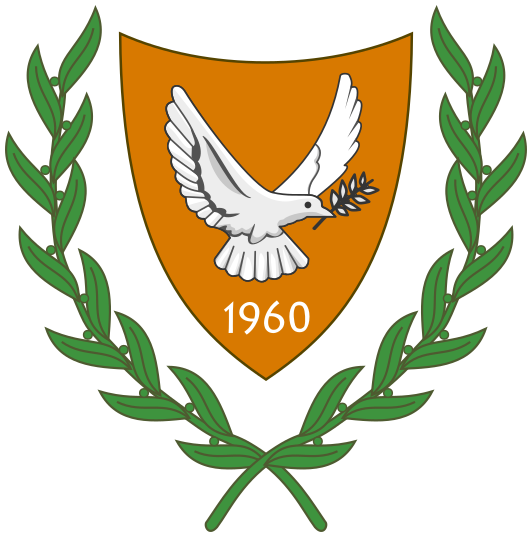 Cyprus Cyprus |
The emblem (1960) shows a dove carrying an olive branch, surrounded by a two-part olive wreath. The two parts represent the Greek Cypriot and Turkish Cypriot communities. The year 1960 appears below. |
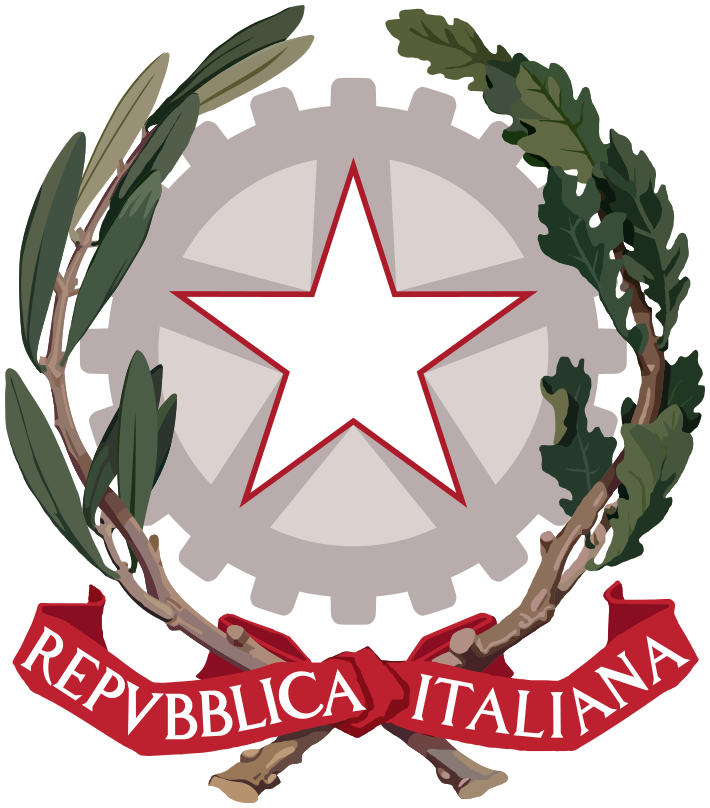 Italy Italy |
The emblem (1948) shows a white star on a gear, flanked by an olive branch on the left and an oak branch on the right. Official reading: olive for peace, oak for strength. |
 Malta Malta |
The shield (since 1988) is flanked by a palm branch and an olive branch, tied together with a ribbon reading "Repubblika ta' Malta." |
 Moldova Moldova |
The eagle on the Moldovan emblem holds an olive branch in its right talon and a scepter in its left. |
 North Cyprus (limited recognition) North Cyprus (limited recognition) |
A dove holding an olive branch appears above a crescent and star. |
Africa
 Comoros Comoros |
The state seal (2001) is surrounded by two olive branches forming a wreath around the crescent moon and four stars from the national flag. |
 Eritrea Eritrea |
The emblem (adopted May 24, 1993, the date of independence) shows a camel surrounded by an olive branch wreath. The camel references the logistics of the independence struggle. |
 Guinea Guinea |
The emblem includes a dove holding a golden olive branch above the national motto "Travail, Justice, Solidarité." |
 Somaliland (limited recognition) Somaliland (limited recognition) |
The emblem features an eagle, scales of justice, and an olive branch alongside Quranic verse. |
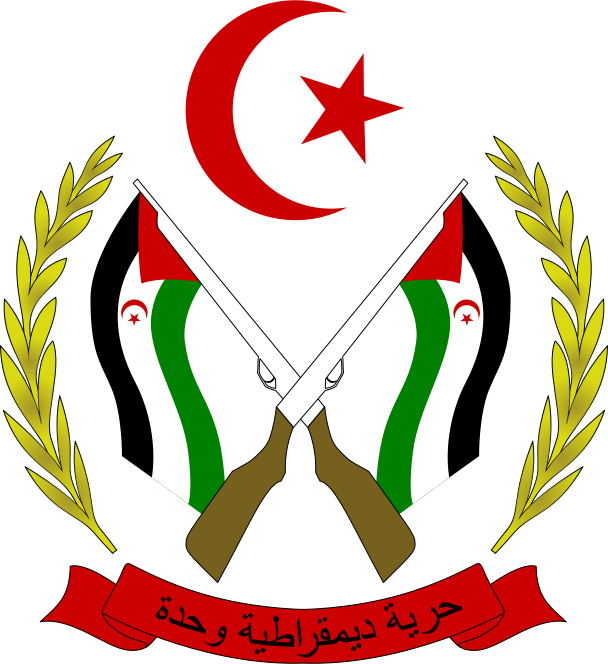 Western Sahara (limited recognition) Western Sahara (limited recognition) |
Two olive branches frame the emblem of the Sahrawi Arab Democratic Republic. |
Oceania
 Fiji Fiji |
The coat of arms (1908) includes, in the third quarter of the shield, a dove in flight carrying an olive branch. |
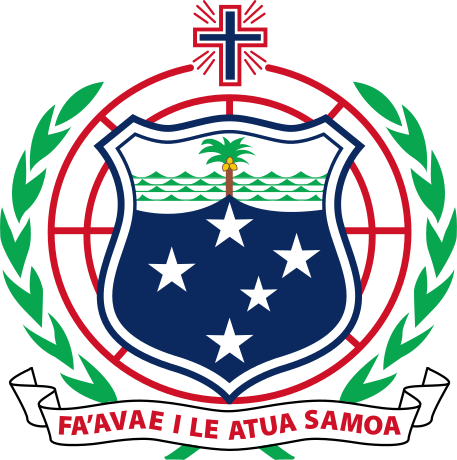 Samoa Samoa |
The emblem (1962) draws from the design language of the UN emblem, including olive branches framing the composition. |
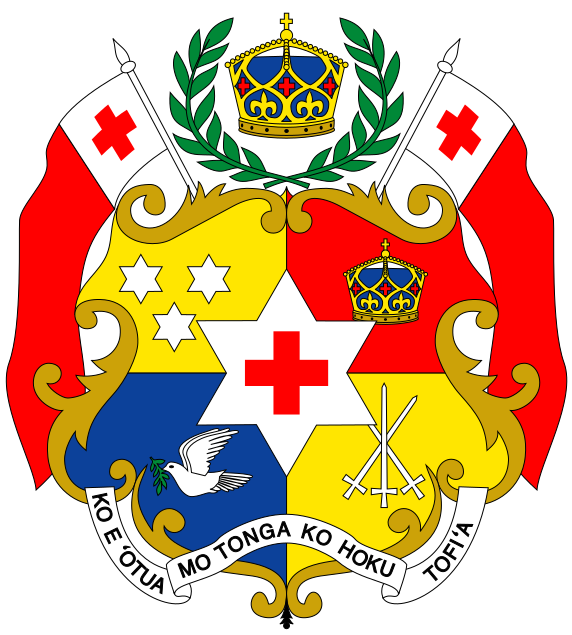 Tonga Tonga |
The coat of arms includes a dove with an olive branch in the lower-left quarter, and a crown surrounded by an olive wreath at the top. |
International
 United Nations United Nations |
The UN emblem, approved in 1946, shows a world map projection surrounded by two olive branches meeting at the bottom. Probably the most widely reproduced olive branch in existence. |